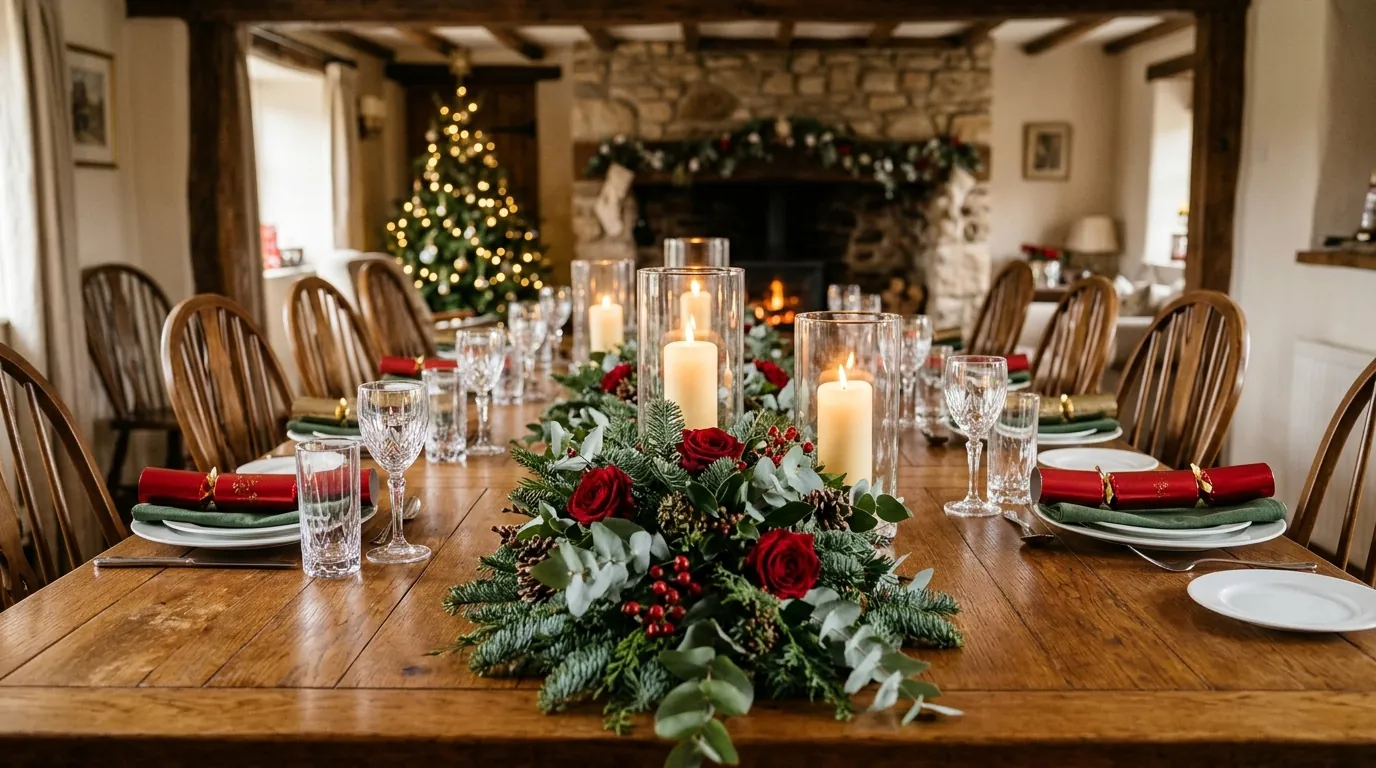
Every December we make centrepieces for Christmas dinners all over Huddersfield and Barnsley, and the two questions I'm asked most are "how big should it be?" and "can I make one myself?" The answer to the second is yes, and this guide shows you how. But it's worth getting the size right first, because a beautiful centrepiece that's too tall or too wide just ends up on the sideboard by the time the turkey comes out.
The Quick Answer
A good Christmas table centrepiece is:
- About a third of the length of your table. Long enough to look generous, with plenty of room left for the food.
- No more than 30cm (12 inches) wide. That leaves space for plates, glasses and serving dishes on either side.
- No more than 30cm (12 inches) tall. Low enough for everyone to see and talk to each other across the table.
To make one, you need a shallow tray, a block of floral foam, some candles, an armful of Christmas foliage and a handful of flowers. It takes about an hour, and you can make it two or three days before the big day.
Rather we made it for you? Our fresh Christmas table centrepieces start from £45, made to fit your table and colours in our Denby Dale studio, with free local delivery on orders over £30.
See Centrepieces & PricesWhat Size Centrepiece for Your Table?
Measure the length of your table, then use this as a guide:
| Table | Typical length | Centrepiece |
|---|---|---|
| Round, 4 seats | 90–110cm across | A round, low arrangement 25–30cm across, with one candle in the middle |
| Rectangular, 4 seats | 120–140cm | 40–45cm long, with one or two candles |
| Rectangular, 6 seats | 160–180cm | 55–60cm long, with two or three candles |
| Rectangular, 8 seats | 200–240cm | 70–80cm long, or two matching 45cm centrepieces spaced along the table |
| 10 seats or more | 240cm+ | Two or three matching centrepieces, or a long, low garland of foliage down the middle with small arrangements along it |
A few things that change the answer:
- If the food goes on the table, go a size smaller. Serving dishes, gravy boats and the turkey itself all need somewhere to sit.
- If your table is narrow (under 80cm wide), keep the centrepiece to around 20cm wide, or put it on the sideboard for the meal and bring it back for pudding.
- For an extended table, two smaller centrepieces usually look better than one very long one, and they're easier to move when you need the space.
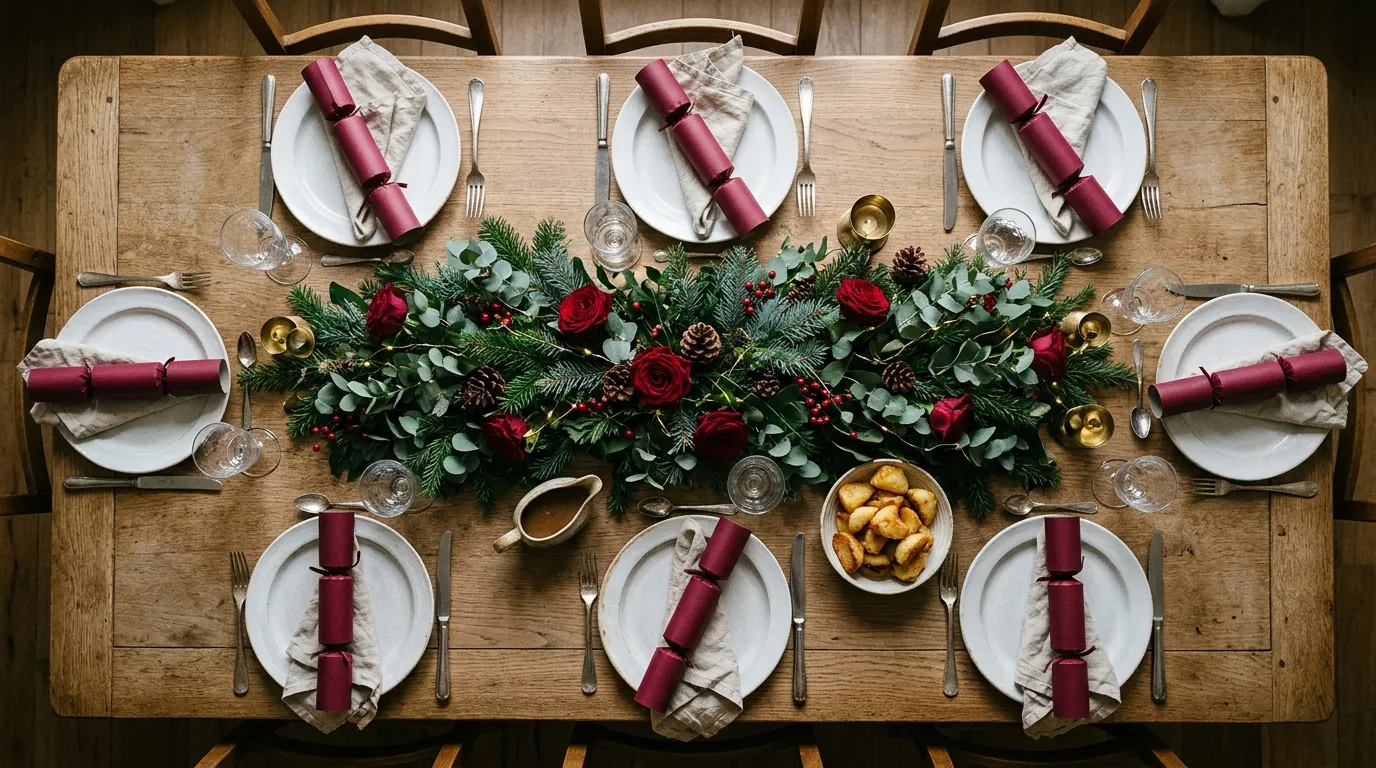
About a third of the table's length and no more than 30cm wide leaves plenty of room for plates and dishes.
The Height Rule
Sit down at your table and look across it. Your eyes are about 30–40cm above the tabletop, so anything taller than 30cm (12 inches) gets in the way of conversation. Keep all the flowers and foliage below that.
Candles are the exception. Slim taper candles can stand taller, because you can see past them easily. It's the bulky, leafy height that blocks the view across the table.
What You'll Need
- A shallow, waterproof container. A plastic florist's tray, a lined wooden trough or a low dish. For a 60cm centrepiece, a tray about 30cm long is plenty, as the foliage extends beyond it at each end.
- Floral foam, cut to fit the tray, and some florist's tape to hold it in place. (If you'd rather avoid foam, a tray of damp moss held down with a piece of chicken wire works too.)
- Candles, plus candle holders or spikes that push into the foam. If you haven't got any, tape three or four cocktail sticks around the base of each candle.
- Foliage: fir or blue pine, holly, ivy, eucalyptus and skimmia all work beautifully and last well. Garden greenery is perfect.
- Flowers: 7 to 12 stems, depending on the size. Roses, spray carnations and chrysanthemums are long-lasting choices.
- Finishing touches: pinecones, dried orange slices, cinnamon sticks or berries, and some florist's wire to attach them.
- Sharp scissors or secateurs, and a small jug of water.
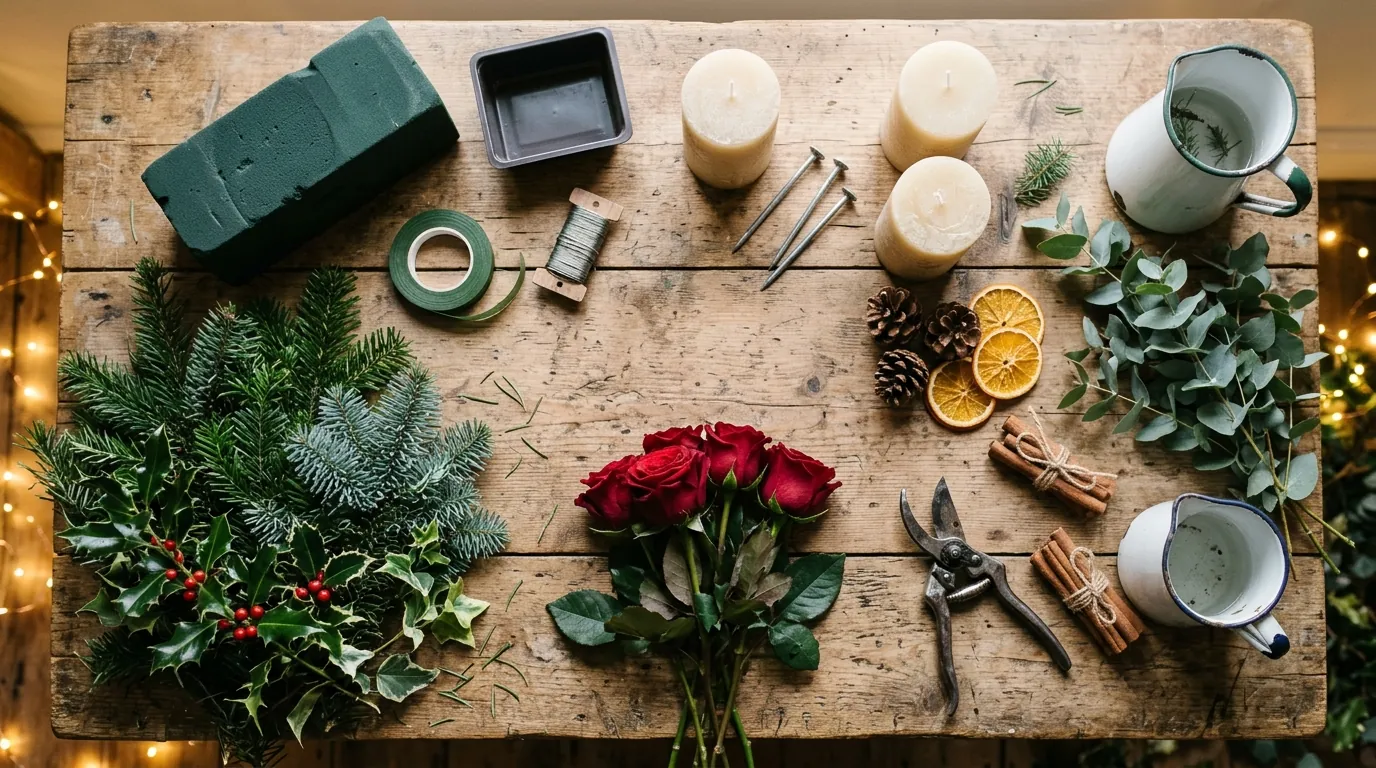
Everything you need for a 60cm centrepiece. Most of the foliage can come from the garden.
How to Make It, Step by Step
- Soak the foam. Fill a bowl or sink with water and lay the foam on top. Let it sink on its own, which takes about a minute. Don't push it under, or it will stay dry in the middle.
- Fix the foam in the tray. Cut the corners off the top edge of the foam so it's easier to cover, then strap it to the tray with two strips of florist's tape. It should sit just above the rim.
- Put the candles in first. Push the candle holders or spikes into the foam, spaced evenly along the middle. Doing this before the foliage stops you crushing anything later.
- Make the outline. Cut a long piece of foliage for each end, about 15cm, and push it into the end of the foam so it lies almost flat along the table. Then add shorter pieces along both sides, angled slightly downwards, to hide the edge of the tray. Cut every stem at a slant and push it in 2–3cm.
- Fill in with foliage. Work along the top, using shorter pieces, until you can't see any foam. Mix the textures (fir next to eucalyptus, holly next to ivy) so it doesn't look flat. Keep everything low.
- Add the flowers. Place them in a gentle zig-zag along the length, rather than in a straight line, and keep the heads tucked in among the foliage. Odd numbers look most natural.
- Finish it off. Wrap wire around the base of each pinecone and push the ends into the foam. Do the same with orange slices and cinnamon bundles. Add them in little groups of two or three.
- Check it from your seat. Put the centrepiece on the table, sit down and look across it. Trim anything that pokes up, and fill any gaps you can see from the side.
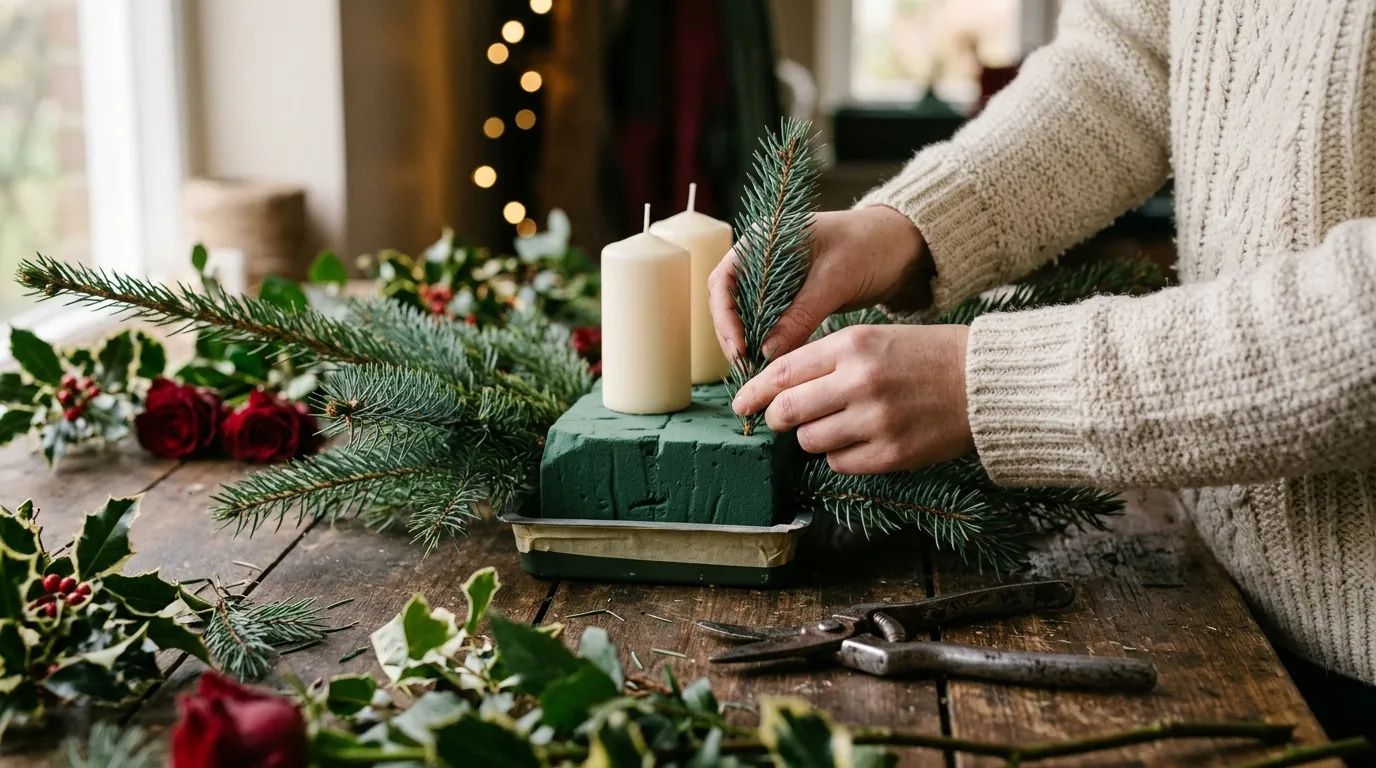
Candles in first, then the outline at each end, then fill in until no foam shows.
Three Easy Colour Schemes
- Classic red and gold. Fir and holly with red roses or carnations, red berries and gold candles. Warm and traditional, and it never dates.
- White and silver. Eucalyptus and blue pine with white roses, white spray chrysanthemums and silver-sprayed pinecones. Lovely with white crockery and a lot of candlelight.
- Natural and woodland. Mixed greenery, moss, pinecones, dried orange slices and cinnamon, with cream candles and hardly any flowers. Smells wonderful, and it's the easiest one to make from the garden.
Candle Safety
Dry foliage catches fire very easily, so please take care with real candles:
- Keep at least 5cm of candle clear above the foliage, and blow the candles out before they burn down towards the greenery.
- Never leave candles lit when no one is in the room, and don't move the centrepiece while they're burning.
- Keep crackers, paper napkins and party hats well away from the flames. They're the most common cause of table fires at Christmas.
- Glass hurricane covers make real candles much safer, and LED candles are the best choice if you have young children or pets.
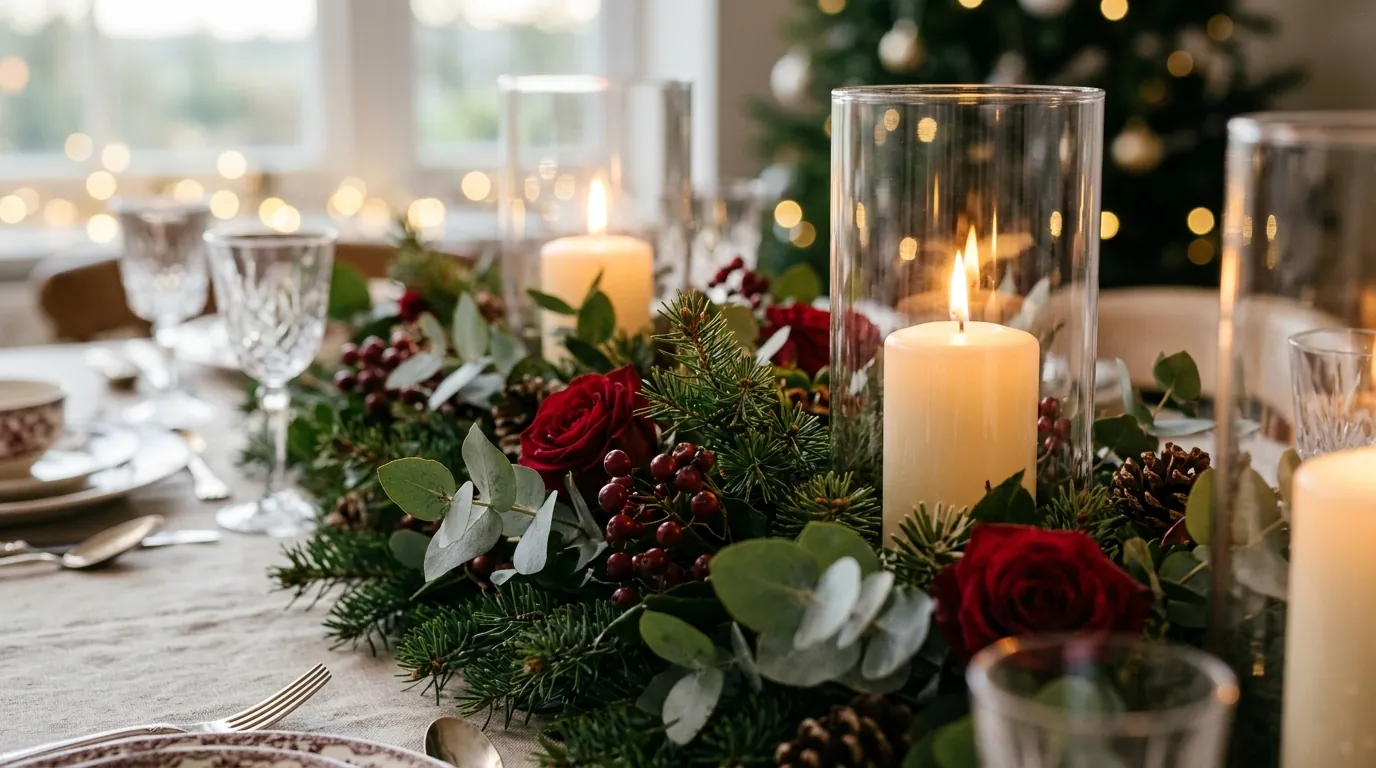
Glass hurricanes keep the flames well away from the foliage and look beautiful in the candlelight.
Keeping It Fresh
- Make it two or three days before. A centrepiece made on the 22nd or 23rd December will look its best on Christmas Day.
- Top up the water every day. Pour a little water slowly into the foam from a jug. If the foam feels light or has turned a paler green, it's drying out.
- Keep it cool overnight. Move it into the coldest room in the house, or a porch or garage, until you need it. Keep it well away from radiators, the oven and the fire.
- Let it carry on into the new year. The foliage usually outlasts the flowers. When the roses or carnations fade, pull them out and the greenery will keep going for another week or so.
Mistakes We See Every Year
- Too tall. It looks wonderful when you set the table, then gets moved as soon as everyone sits down.
- Too wide. If there's no room for the dishes, the centrepiece loses.
- Strongly scented flowers. Lilies and hyacinths compete with the smell of the dinner, and lily pollen stains tablecloths. Lilies are also very poisonous to cats.
- Forgetting the pets. Holly berries, ivy and mistletoe are harmful to cats and dogs if they're eaten, so keep the centrepiece out of reach when the table isn't in use.
- Making it too early. In a warm house, a centrepiece made a week ahead will be tired by Christmas Day.
Rather We Made It for You?
If you'd rather spend the week before Christmas doing something else, we hand-make fresh table centrepieces in the studio from £45. Just tell us how long your table is, how many you're seating and your colours, and we'll make one to fit. We also make wooden troughs for sideboards and windowsills, and Christmas hat boxes, which make a lovely gift to take to whoever's hosting. Centrepieces for Christmas week book up quickly, so see when to order Christmas flowers for our advice on timing.
Common Questions
What size should a Christmas table centrepiece be?
As a rule, about a third of the length of your table, no more than 30cm (12 inches) wide, and no more than 30cm tall. For a typical 6-seat table of around 180cm, that means a centrepiece of about 60cm long.
How tall should a table centrepiece be?
Keep the flowers and foliage under 30cm (12 inches) from the table, so guests can see and talk to each other across it. Slim taper candles can stand taller than this, because you can see past them.
How far in advance can I make a fresh Christmas centrepiece?
Two or three days before is ideal. Kept somewhere cool overnight and topped up with water every day, a fresh centrepiece made on the 22nd or 23rd will look its best on Christmas Day.
How long does a fresh table centrepiece last?
With the foam kept damp, around one to two weeks. The foliage usually outlasts the flowers, so once the roses or carnations fade you can pull them out and keep the greenery going into the new year.
Is it safe to put real candles in a centrepiece?
Yes, if you keep at least 5cm of candle clear above the foliage, blow them out before they burn down to the greenery, and never leave them lit when no one is in the room. Glass hurricane covers or LED candles are the safest choice, especially with children or pets about.
Order a handmade Christmas table centrepiece from our Denby Dale studio, made to fit your table.
See Our Centrepieces & Prices