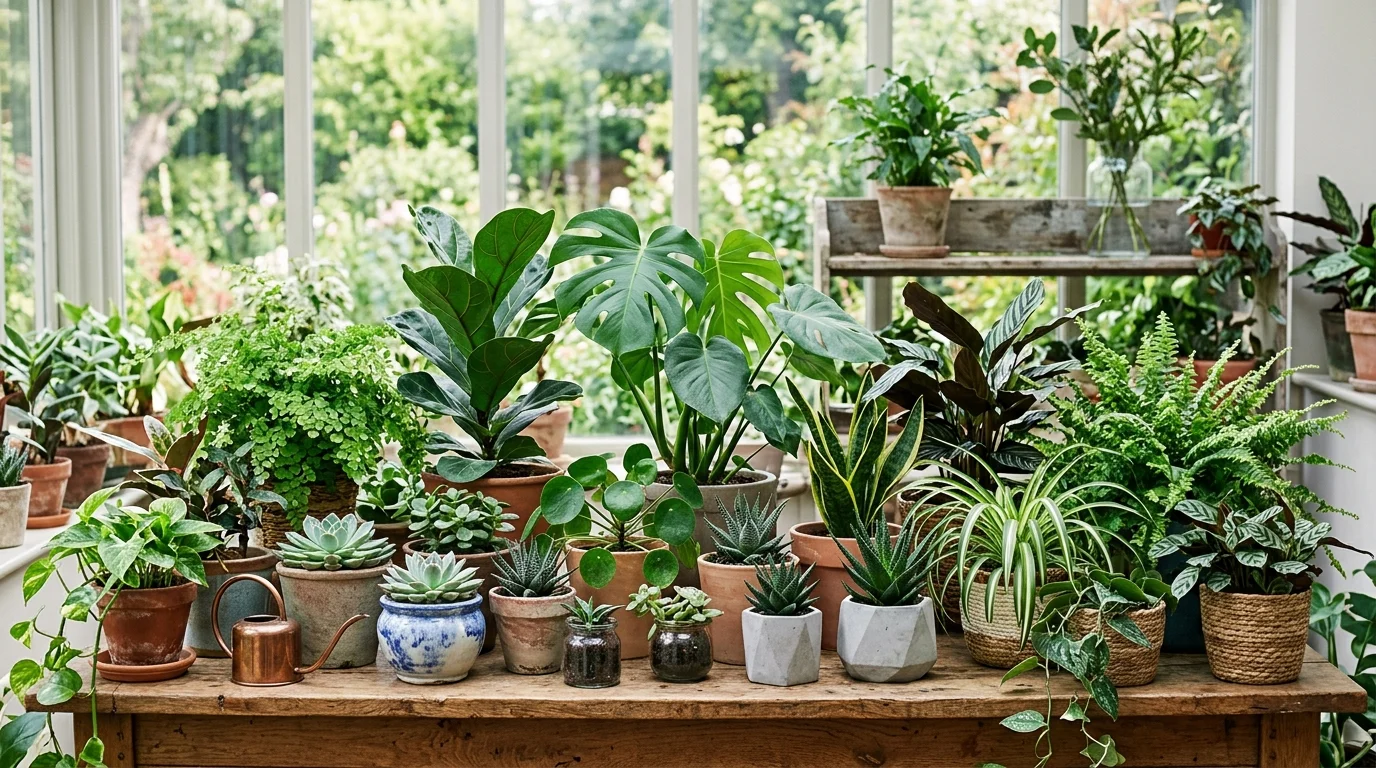
Every week someone comes into the shop and says some version of "I love plants but I kill everything" — and every week I tell them the same thing: it's very rarely the person, it's almost always the plant choice. Some houseplants genuinely want to be fussed over; plenty of others are perfectly happy being left alone for a fortnight. If you're just starting out, or you've had a few losses and want to try again, these five are where I'd point you.
1. Snake Plant (Sansevieria)
About as close to indestructible as houseplants get. Snake plants tolerate low light, bright light, irregular watering and general neglect better than almost anything else we sell. Water only when the compost is completely dry — for most homes that's every two to three weeks, less in winter — and resist the urge to water "just in case." Overwatering is the only real way to harm one.
2. ZZ Plant (Zamioculcas zamiifolia)
The ZZ plant stores water in its thick underground rhizomes, which is why it copes so well with being forgotten about. It's happy in low light, doesn't mind a dry spell, and its glossy leaves make it look far more high-maintenance than it actually is. Water sparingly — again, let the compost dry out fully between waterings — and it will quietly get on with things in a corner that barely gets any natural light.
3. Pothos (Devil's Ivy)
A trailing plant that's genuinely difficult to get wrong. Pothos tolerates a wide range of light levels, forgives an occasional missed watering, and will tell you clearly when it's thirsty — the leaves droop noticeably, then perk back up within hours of a drink. It's also one of the easiest plants to propagate from a cutting in a jar of water, so one plant can become several for free.
4. Spider Plant (Chlorophytum comosum)
A classic for a reason. Spider plants are happy in a range of light conditions, tolerate irregular watering, and reward good care by sending out "babies" on long stems that you can pot up separately. They're also one of the more forgiving plants if you're prone to overwatering occasionally, since they cope with both extremes reasonably well.
5. Peace Lily (Spathiphyllum)
The peace lily is the one exception on this list that does like consistent moisture, but it earns its place by being wonderfully honest about what it needs — the leaves droop dramatically when it's thirsty, then spring back within an hour or two of watering. If you tend to forget to water things, this dramatic "tell me what you need" behaviour actually makes it easier to look after than plants that suffer silently.
The Basics That Matter Most
- Check before you water. Push a finger into the compost — if it's still damp an inch or two down, wait. Overwatering kills far more houseplants than underwatering.
- Match the plant to the light you actually have. Be honest about how bright your room really is — a "bright" room without direct sun is still fairly low light by plant standards.
- Let pots have drainage. A pot with no drainage hole, or a decorative cover pot with water pooling in the bottom, is one of the most common causes of root rot.
- Don't panic over one bad leaf. An occasional yellowing or browning leaf, especially lower down, is often just the plant naturally shedding old growth — remove it and keep an eye, rather than assuming disaster.
Start with one or two of the plants above, get a feel for how they behave in your home, and build your confidence from there. Houseplants are far more forgiving than their reputation suggests — you just need the right ones to start with.
Pop into the shop on Wakefield Road and we'll help you pick a houseplant to suit your home, your light, and how much attention you're realistically going to give it.
Get in Touch