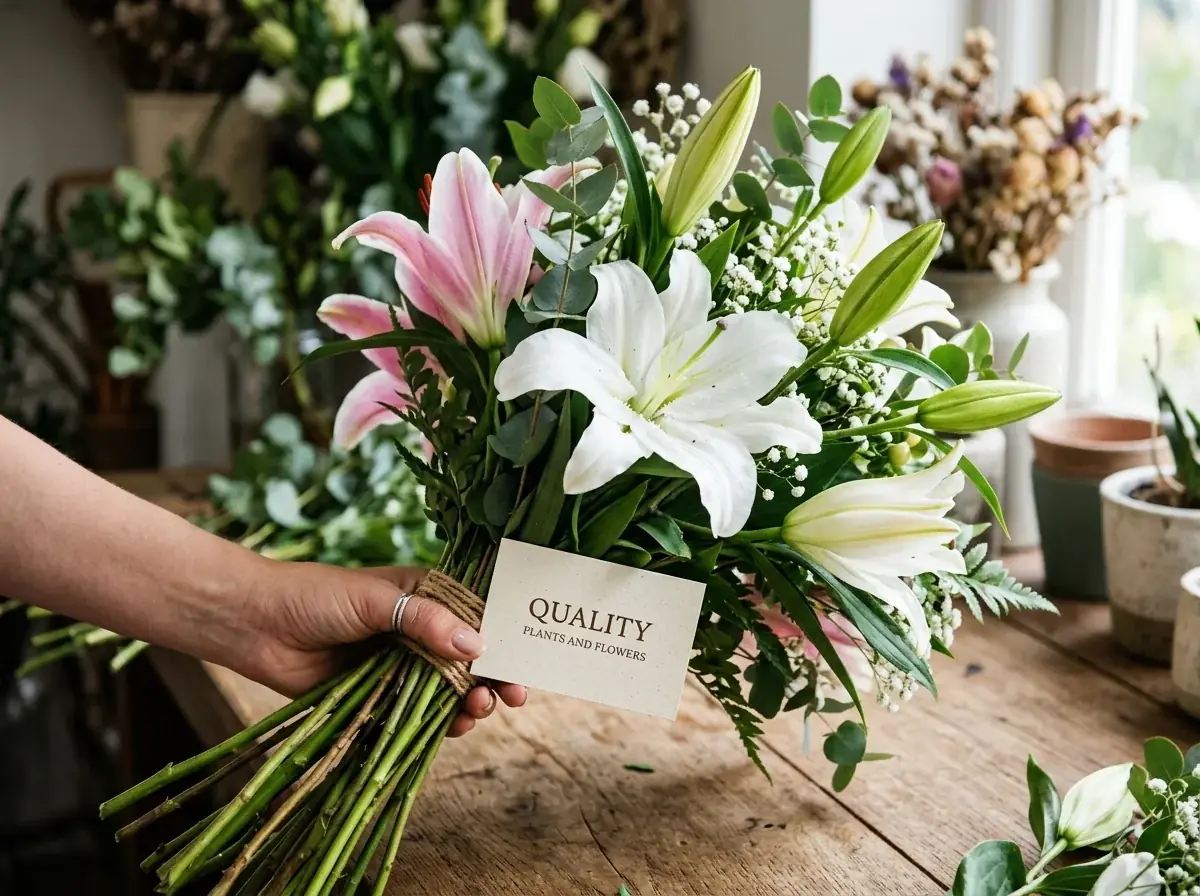
I get asked this more than almost anything else in the shop: "what can I do to make these last?" The honest answer is that most of it isn't complicated — it's just a handful of small habits that, done consistently, can add several extra days to a bouquet. Here's everything I tell customers when they're heading out the door with fresh flowers from Wakefield Road.
Give the Stems a Fresh Cut
The moment a stem is cut from the plant, the cut end starts to seal itself with air and a build-up of natural sap — which is exactly what stops it drinking water properly a few days later. Before you put your flowers in a vase, snip about 2cm off the bottom of each stem at an angle, using clean, sharp scissors or flower snips rather than blunt kitchen scissors, which tend to crush the stem instead of cutting it cleanly. Cutting at an angle also stops the stem sitting flat against the bottom of the vase, which can block water uptake entirely.
It's worth repeating this every two or three days for the life of the bouquet, not just once at the start — a fresh cut each time keeps the stem drinking properly right through the display.
Strip Away Any Leaves Below the Waterline
Any foliage sitting under the water will start to break down within a day or two, and that's usually the first thing that makes vase water go cloudy and start to smell. Strip off any leaves that would sit below the waterline before you arrange your flowers, and keep checking as the water level changes.
Use Your Flower Food Sachet — Don't Skip It
If your bouquet came with a little sachet of flower food, use it — it isn't just marketing. Flower food is a mix of sugar (to feed the flower, since it's no longer attached to the plant's roots), a mild acid (to help the stem draw water up more easily) and an anti-bacterial agent (to slow down the bacteria that clogs stems and clouds water). Mix it into the vase water at the ratio on the packet rather than guessing.
If you don't have a sachet, a teaspoon of sugar and a few drops of household bleach in a litre of water does a similar job in a pinch, though a proper sachet will always give better results.
Change the Water Every Two to Three Days
Even with flower food, vase water benefits from a full change every two to three days — not just topping up, but tipping it out, rinsing the vase, and starting again with fresh water and (if you have it left) more flower food. Cloudy or smelly water is one of the biggest, and most avoidable, causes of a bouquet dying early.
Mind Where You Put the Vase
Flowers last noticeably longer somewhere cool, out of direct sunlight, and away from radiators or the top of the fridge, where the warm air shortens their life. It's also worth keeping them away from a fruit bowl — ripening fruit releases ethylene gas, which ages flowers faster than almost anything else.
A Few Flower-by-Flower Notes
Most of the above applies across the board, but a few flowers have their own quirks worth knowing:
- Roses benefit from an extra sharp diagonal cut and sometimes a few shallow vertical scores up the base of the stem, which helps them drink if they're prone to drooping.
- Tulips keep growing after they're cut — expect them to lean and stretch towards the light over a few days, which is normal, not a sign they're dying.
- Lilies last much longer if you gently remove the orange stamens once the flowers open, which also stops the pollen staining tablecloths or clothing.
- Hydrangeas drink through their petals as well as their stems, so a light mist of water now and then helps if they start to droop.
None of this needs any special equipment — just a bit of attention every couple of days. Looked after this way, most of our hand-tied bouquets will happily last a week to ten days, sometimes longer depending on the flowers involved.
Fancy a fresh bouquet to practise on? We hand-tie every order in the shop on Wakefield Road, using the best seasonal flowers we can get hold of.
Order Fresh Flowers