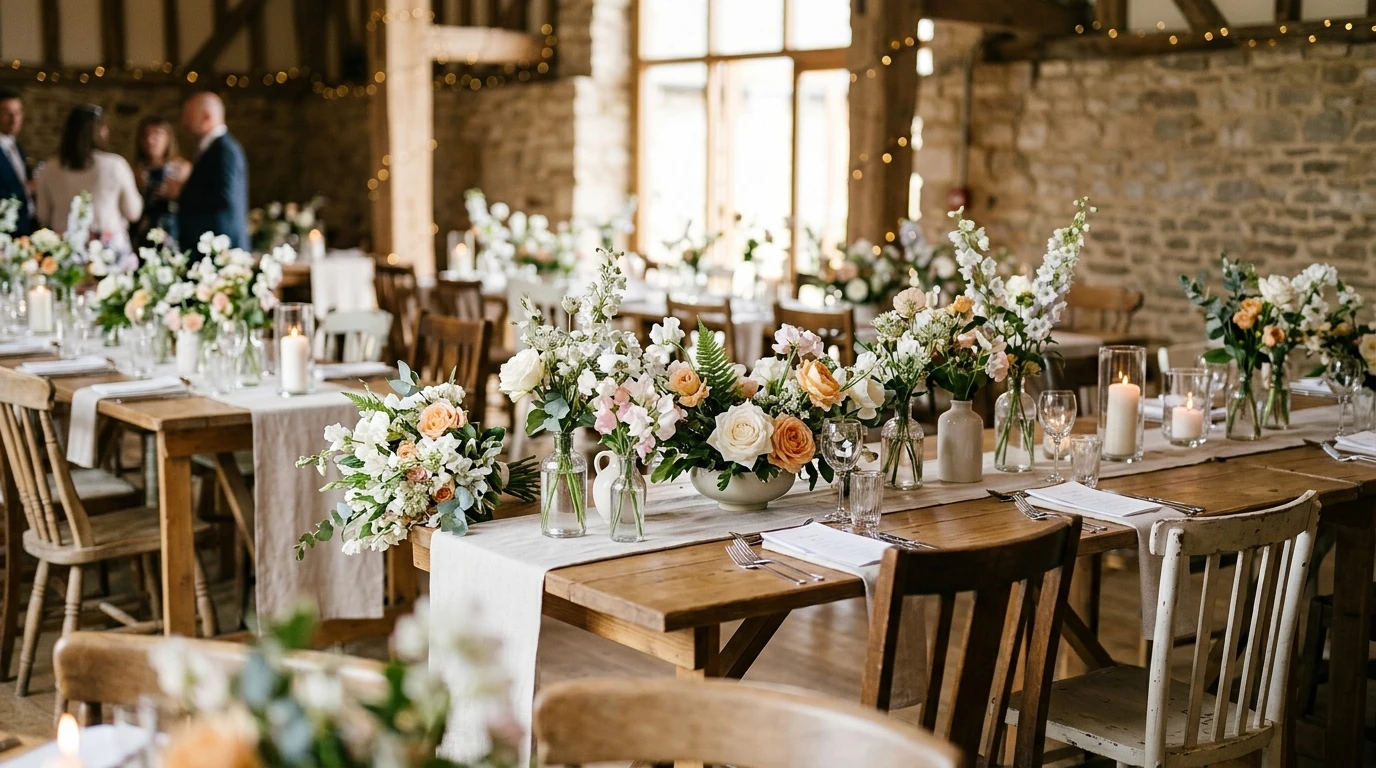
One of the first things I ask a couple, right after their date, is where. It's easy to think of wedding flowers as one big decision — bouquet, colour, budget — but the venue does almost as much work as the season in shaping what will actually look right on the day. A loose, wildflower-style posy that's stunning against a stone barn's beams can get swallowed up in a grand hall with twenty-foot ceilings, and the reverse is just as true. Rather than picking flowers you like and hoping they suit the room, it's worth starting from the venue itself and working outward. Here's how I think about it, venue by venue.
Grand Country House & Hotel Weddings
Grand entrance halls, high ceilings and formal ceremony rooms call for flowers with genuine presence — arrangements that can hold their own in a big space rather than getting lost in it. Tall pedestal displays either side of a staircase or doorway are the classic choice, alongside structured pew-end or aisle florals for the ceremony room itself. Colour palettes tend to lean romantic and classic — blush, ivory and soft cream, built around garden roses and peonies where the season allows — with a more gathered, "designed" finish rather than anything loose or just-picked.
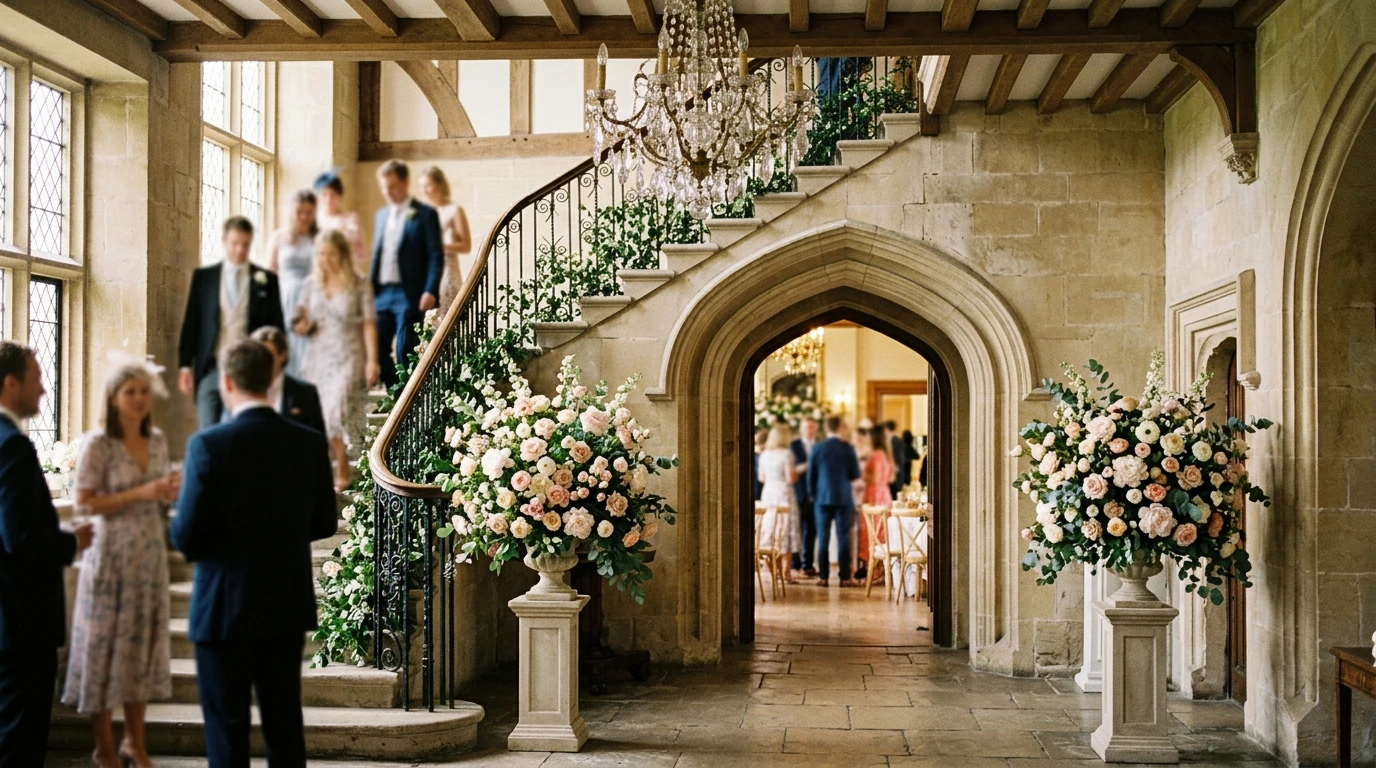
Tall pedestal displays either side of a staircase, in a soft blush and ivory palette.
A venue like Bagden Hall, the Victorian country house set in 40 acres just up the road from us on Wakefield Road, is a lovely example of this style. A wedding at a grand country house of that kind calls for exactly this sort of arrangement — tall, romantic pedestal displays to make the most of a big entrance hall, and more formal, structured florals for a ceremony room with real architectural character of its own.
Rustic Barn Weddings
Barns call for the opposite approach. Exposed beams, natural wood and an already-decorated, informal feel mean flowers work best when they look gathered rather than arranged — loose, textured hand-tieds with plenty of movement, dried elements like wheat, bunny tails or dried gypsophila, and foliage-heavy installations trailing along the beams themselves rather than sitting stiffly in a vase. Table displays tend to follow the venue's own styling — jam jars, milk churns and wooden crates rather than formal vases — so the flowers feel like part of the room, not an addition to it.
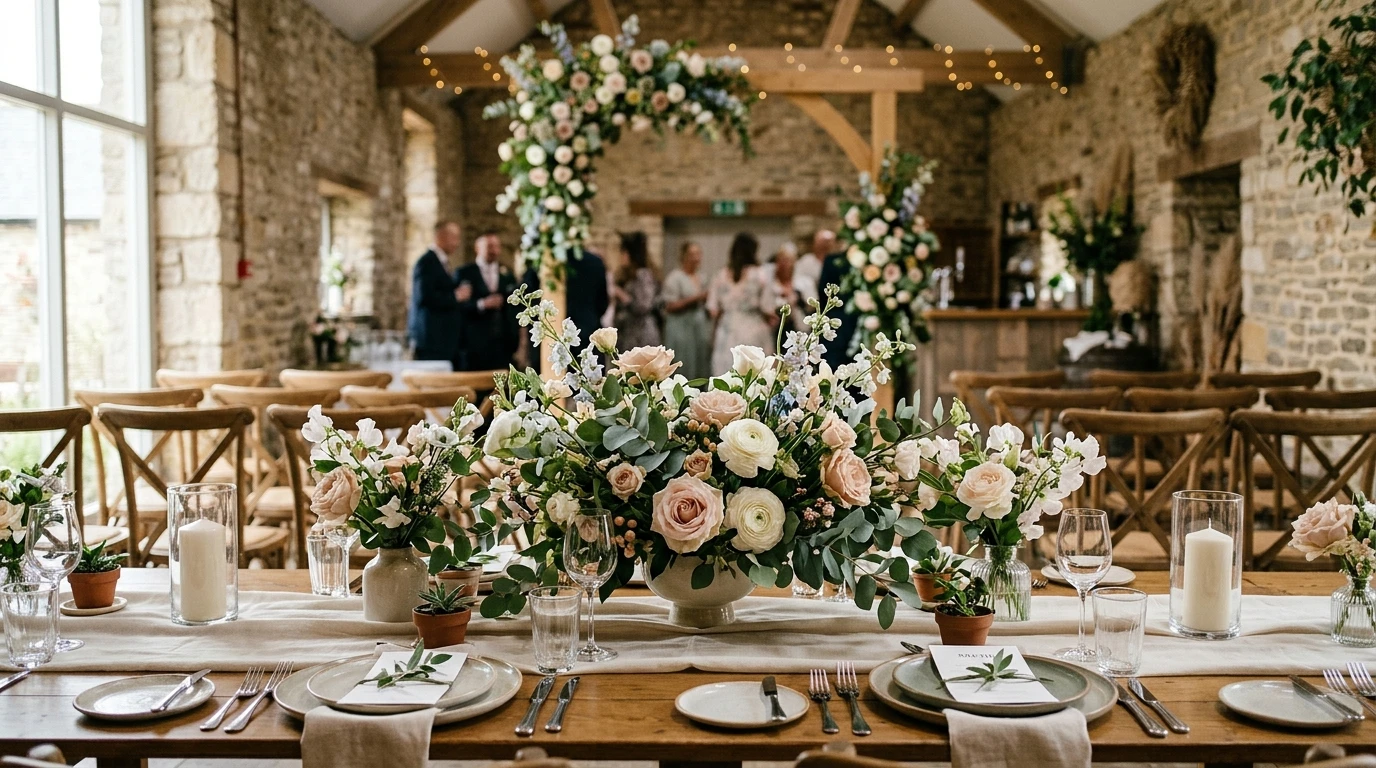
A floral arch and a looser, textured table centrepiece styled for a barn reception.
Denroyd Farm, the licensed barn venue at Upper Denby, is a good example of a space built for this kind of styling. A barn wedding at a venue like Denroyd calls for looser, more textural florals that lean into the rustic setting rather than fighting it — hanging installations from the beams, and table displays that echo the venue's own wooden crates and churns.
Marquee & Outdoor Garden Weddings
A marquee or garden ceremony has one thing going for it that no indoor venue can offer — the setting is already beautiful, so the flowers' job is to complement it rather than compensate for a blank room. Aisle and arch florals for an outdoor ceremony need to be a little more weather-resilient than an indoor arrangement — sturdy stems and blooms that won't wilt in the sun or droop in a breeze — and it's usually worth keeping the palette close to what's already growing around the venue rather than importing something that clashes with it. Inside the marquee itself, larger-scale but airy arrangements at the entrance and along the tables work better than anything too tightly structured, since the space is already open and informal by nature.
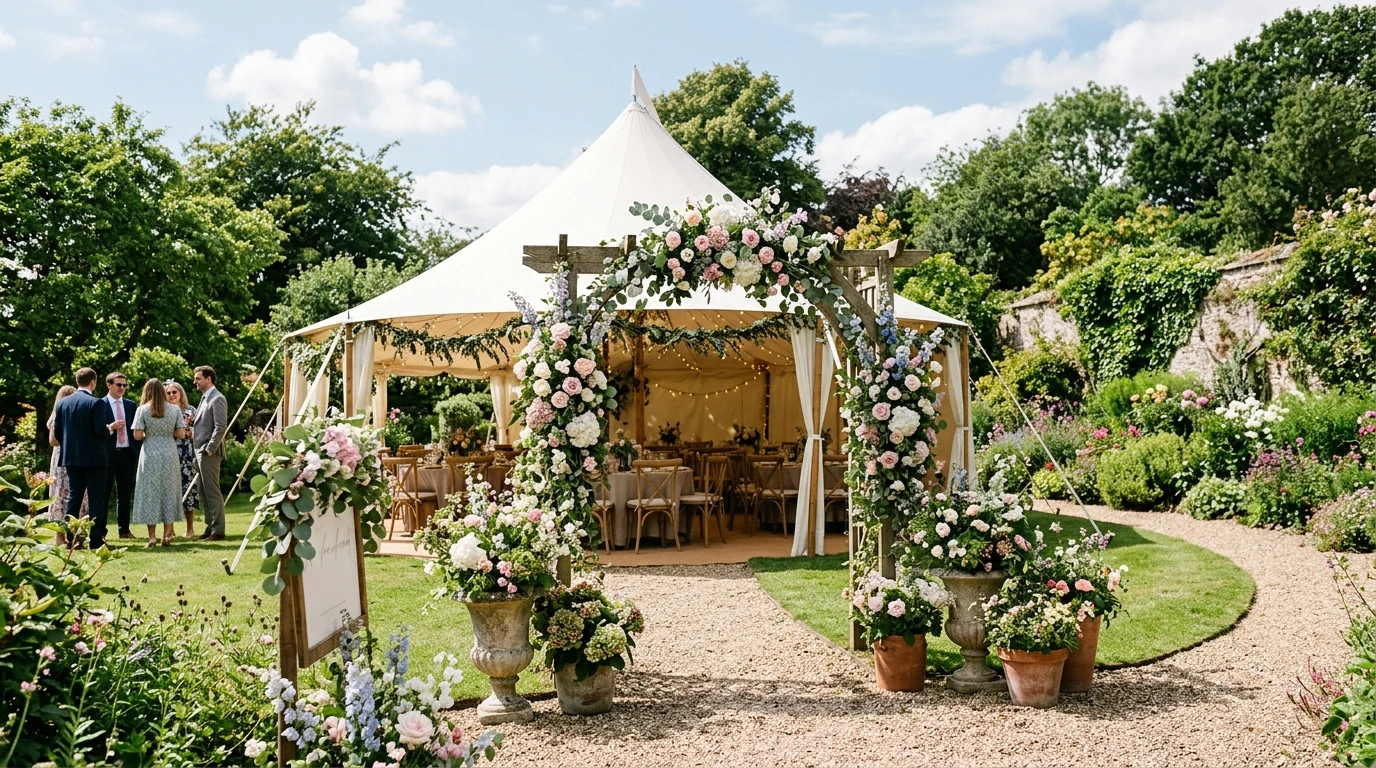
A marquee entrance framed with a rose and eucalyptus floral arch, set within the garden rather than fighting it.
This is one of the most popular styles for summer weddings across the Denby Dale, Holmfirth and wider Kirklees countryside, simply because there's so much beautiful ground to work with.
Church & Traditional Ceremony Weddings
Traditional church weddings come with their own practical considerations as much as stylistic ones. Many churches restrict what can be pinned or fixed to pew ends and stonework, so tied designs that hook or tie on, and freestanding pedestal arrangements for the altar and porch, are usually the easiest option rather than anything that needs fixings. Aesthetically, a classic palette — white, ivory and soft green — tends to suit most stone interiors regardless of the colour scheme elsewhere in the day, which is part of why it's remained the traditional choice for so long. A simple arrangement at the porch or entrance is also one of the nicest ways to welcome guests before they've even sat down.
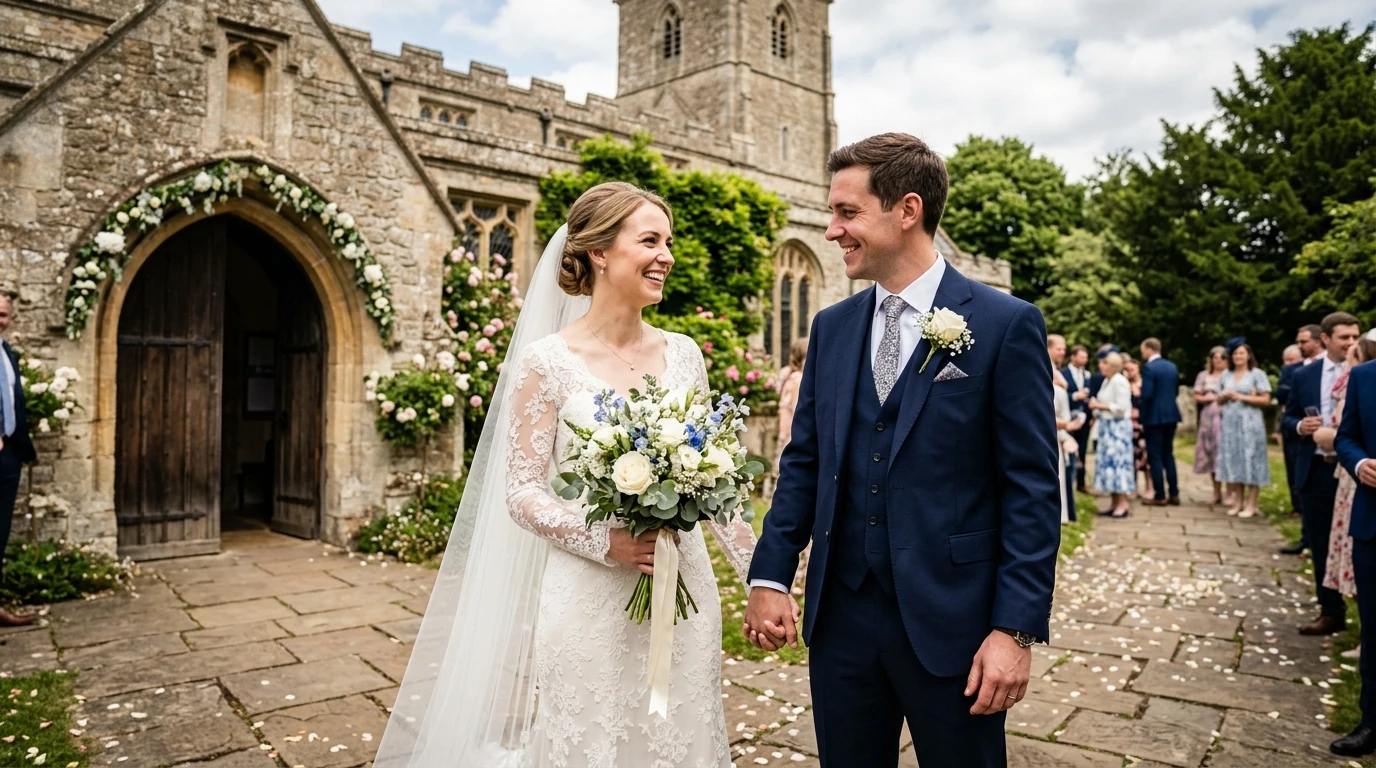
A classic white and green palette, chosen to suit the stonework rather than compete with it.
A Few Practical Tips for Any Venue
- Visit your venue (or send photos of it) before your flower consultation if you can — a photo of the actual entrance hall or barn beams tells me far more than a description.
- Ask your venue about fixing restrictions early, especially for churches and listed buildings — it's much easier to design around a restriction from the start than to change tack a few weeks before the day.
- If your venue already has a strong material or colour of its own — dark oak beams, pale stone, a bright marquee lining — plan your flowers to sit alongside it rather than compete with it.
Whichever kind of venue you've booked, the same rule applies: let the room do some of the work. Bring me photos of the space, or better yet the name of the venue itself, and we'll build a scheme that suits it rather than fighting it.
Getting married in Denby Dale, Huddersfield or Barnsley? We'd love to talk through your wedding flowers for your specific venue, from a single bouquet to a full package.
See Our Wedding Flowers